LONGEVITY
Why Your Cat Sleeps in the Same Spot Every Afternoon
THE HOUR OF THE CAT AND WHAT HER HABITS REVEAL ABOUT CAT LONGEVITY
Lily Aleksand
Missy is sixteen. She finds the light before I do.
There is a moment in the late afternoon when the light lowers itself onto the floor and the house becomes still. She arrives, unhurried, and lies down precisely where the warmth has gathered.
I have come to call this the hour of the cat. It is not a schedule so much as an agreement: for a short while, nothing is urgent. The kettle can wait. The correspondence can wait.
Longevity, I have found, is not something you do to a cat. It is something you notice, and then protect.
WHY WARMTH MATTERS MORE AS A CAT AGES
For most of her life Missy was a garden cat. Dubai, then Cape Town, where the fireplace was decorative and the door stood open. She spent her days outside and came in at dusk smelling of dust and leaves.
Toronto ended that. There is a gas fireplace in this apartment with a pilot light that never goes out, and by the second winter she had found it. She goes in the late afternoon, or at night. She stretches herself full length against the glass, and when I put my hand on her she is hot right through, and entirely content.
The strange part is August. If I turn the fireplace on in the middle of summer, when the apartment is already too warm and the windows are open, she wants it more, not less. I have stopped trying to explain this to myself.
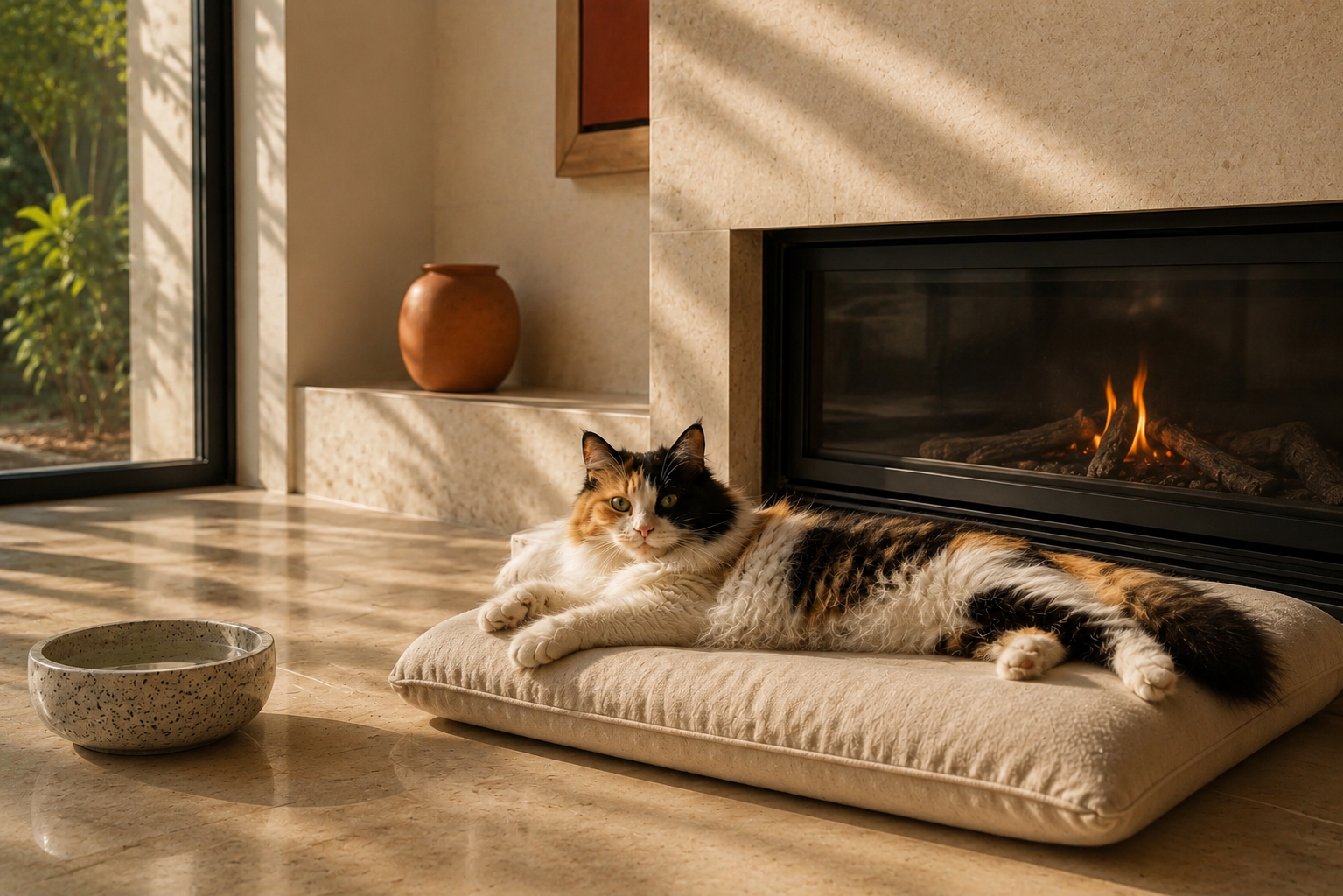
What I understand now is that she was never only after heat. Sunlight moves across a floor and leaves. The glass does not. Somewhere between the garden and the sixteenth year, she stopped chasing warmth and started choosing warmth she could count on.
That preference grows stronger with age. Thermoregulation is expensive, and every degree an animal generates herself is energy not spent on repair and digestion and the quiet maintenance that keeps a body well. Muscle thins. Coats grow less efficient. Circulation slows at the extremities, which is why an older cat presses herself flat against a warm surface rather than curling beside it.
WHAT THE CHOSEN SPOT TELLS YOU ABOUT SAFETY
She never faces the fire. Her back is to the glass and her eyes are on the room.
I noticed this long before I understood it. A cat asleep is a cat at her most exposed, and she has solved for that. Nothing can reach her from behind. Everything that might reach her from the front is already in view. The warmth is only half of what she takes from that spot.
I started reading my own house this way, and the choices stopped looking random. A cat who sleeps with her back against a wall, a sofa, a radiator, has found a position she can rest in properly. A cat who sleeps in the open, or who keeps waking and resettling, has not.
Deep rest is not a small thing. It is where repair happens. A cat who cannot fully let go of the room is sleeping shallowly, night after night, for years, and that carries a cost you will not see for a long time.
HOW ENVIRONMENT DESIGN SHAPES WHERE A CAT RESTS
I did not redesign anything. I put a bed down.
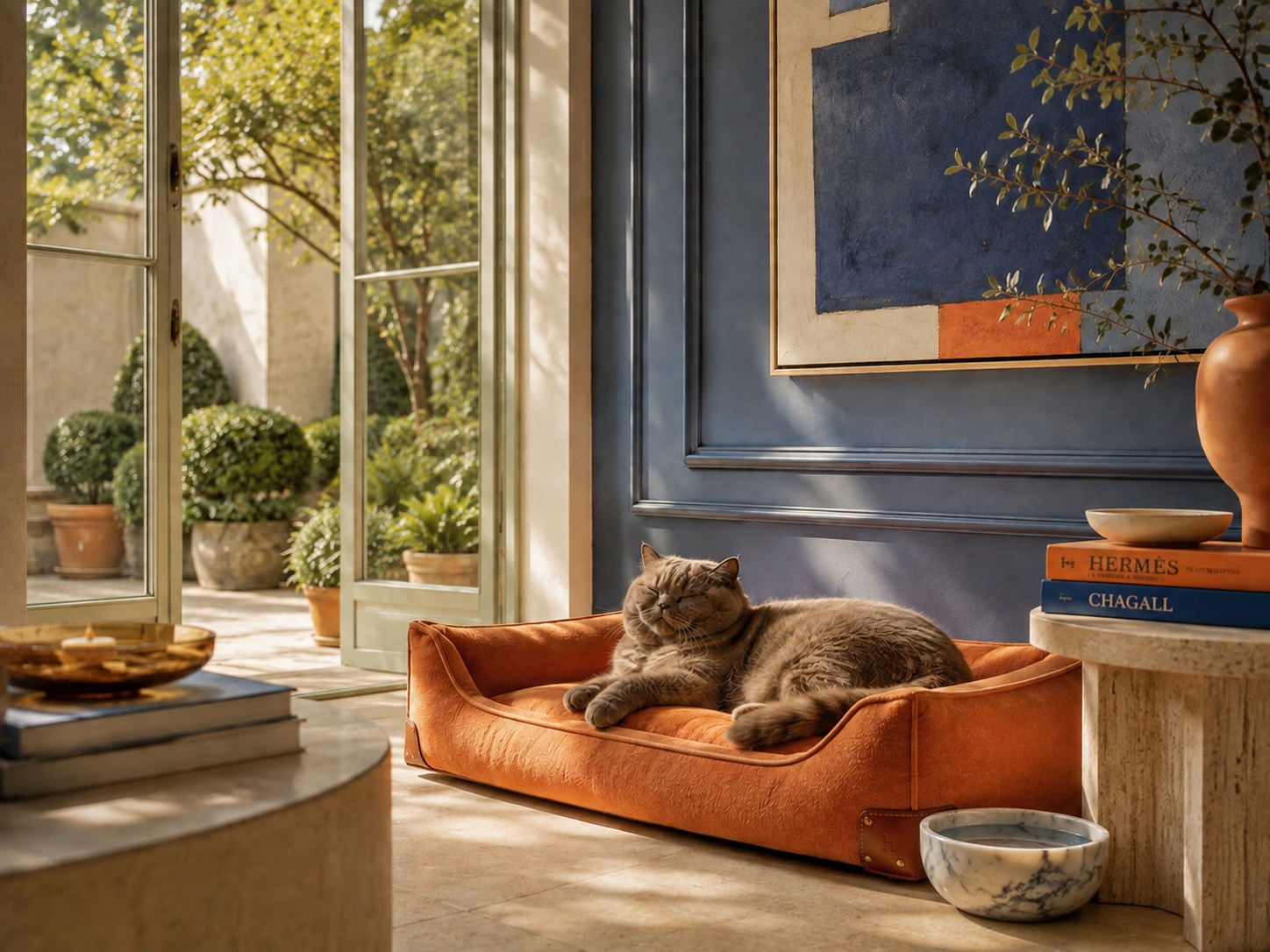
It went beside the fireplace, on the warm side, and she took it the same day. She has used it ever since. Occasionally she chooses the floor by my bed instead, but she comes back. One small object in the right place did more than any rearrangement of furniture I might have attempted.
I change the bed twice a year. In summer it is flat and open, so she can stretch out full length. In winter it is bolstered, with a raised rim she can fold herself into. She uses both correctly, without instruction, the way she has always known more about comfort than I do.
The second thing took longer to notice. There is a bowl of filtered water in that spot as well, and it is the bowl she drinks from most. She has water in several rooms and I change all of it once or twice a day. This is the one she returns to. I moved the same bowl to a cooler part of the apartment once, to see, and she drank less from it there.
I had not planned that. I had simply put two things she liked in the same place. She drinks more than she used to, and that matters more than almost anything else I could arrange for her.
WHEN A CHANGE IN THE SPOT IS WORTH NOTICING
The habit is the point. A cat who chooses the same place at the same hour, day after day, is telling you that something is steady.
Which means the departure is the signal. Not the spot itself, but the change in it. A cat who abandons a favourite place, or who begins sleeping somewhere she never used to, or who stops settling at all and moves from surface to surface through the afternoon, has had something shift. Sometimes it is the room. A new appliance, a draft, a chair moved, another animal in the house. Sometimes it is her.
Cats conceal discomfort with real skill, and pain rarely announces itself. It edits the routine instead. A cat who no longer climbs to her high place may be telling you her joints have changed. A cat who has moved somewhere harder to reach may be telling you she wants to be left alone.
I do not read any of this as diagnosis. I read it as a question worth asking, and worth asking a vet.
Which is the argument for paying attention to something as ordinary as where a cat sleeps at four o’clock. You cannot notice a change unless you knew the pattern first.
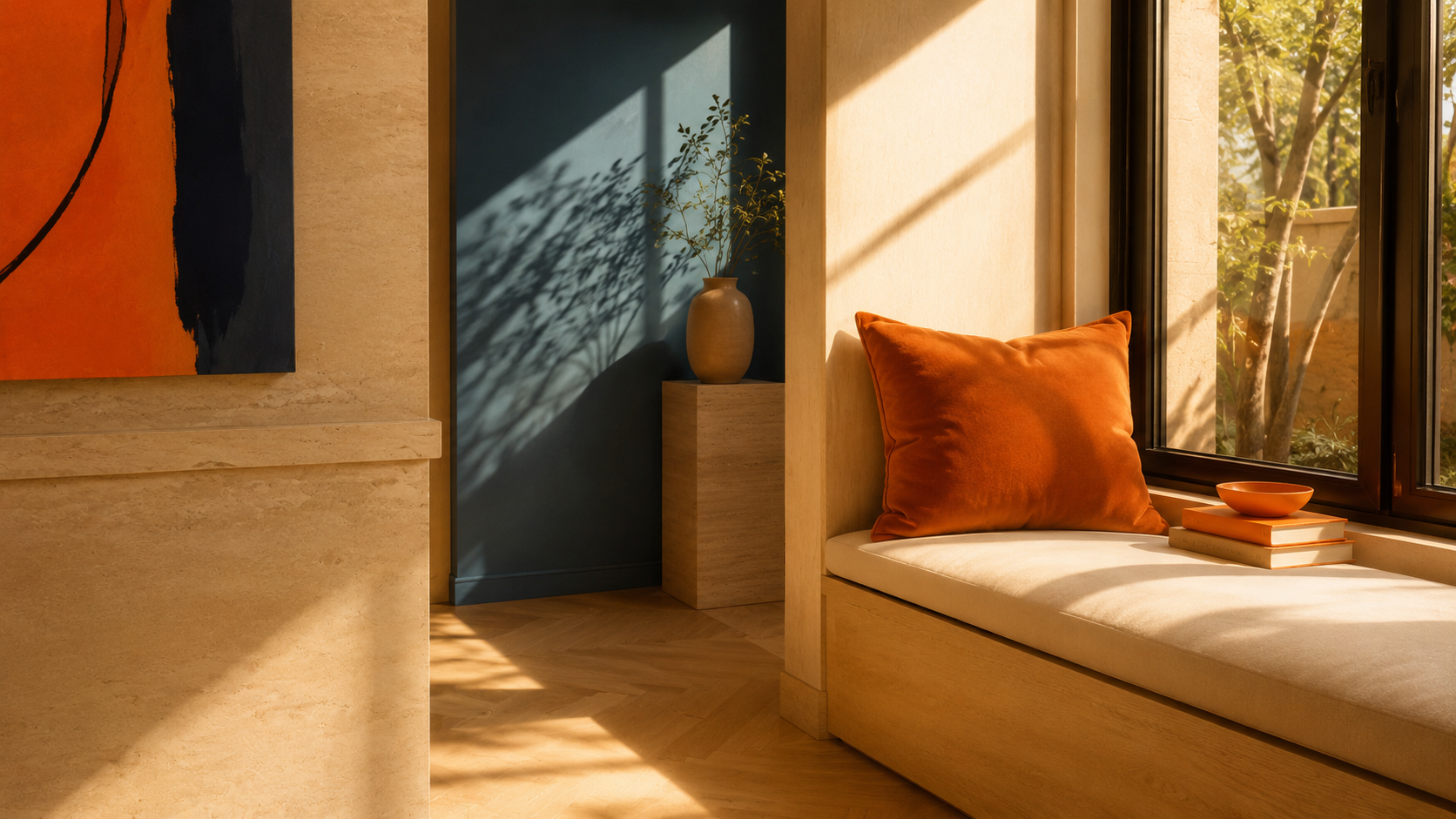
It took me years to notice where the light fell at four o’clock. Now I place something soft there before she arrives. The rest arranges itself.
This is what I learned from cats.
COMPLIMENTARY GUIDE
The Thirst That Does Not Speak
Hydration is the quietest longevity practice in the house. Leave your name and email and I will send the guide to you.